SVAMITVA Scheme Rural Credit India: How Mapping Villages Is Reshaping Financial Inclusion
For decades, rural India has lived with a paradox: millions of households occupy land and homes that represent significant economic value, yet they cannot leverage that value to access formal credit. Without legally recognised property documents, villagers have been locked out of the banking system, forced to rely on moneylenders charging usurious rates or simply unable to invest in their homes, businesses, or livelihoods. The SVAMITVA scheme rural credit India story is fundamentally a story about correcting that historical injustice — and recent data suggests it is beginning to work. A landmark study by the Economic Advisory Council to the Prime Minister (EAC-PM) found that the scheme has lifted rural credit access by 23%, with especially notable gains for disadvantaged communities. For banking professionals, financial institutions, and policymakers, understanding what this scheme does and why it matters is no longer optional — it is essential.
What Is the SVAMITVA Scheme and Who Launched It?
SVAMITVA stands for Survey of Villages and Mapping with Improvised Technology in Village Areas. The scheme was launched by Prime Minister Narendra Modi on 24 April 2020, initially as a pilot programme on National Panchayati Raj Day, before being rolled out nationally in April 2021. It is administered by the Ministry of Panchayati Raj in coordination with the Survey of India, state governments, and local administration machinery.
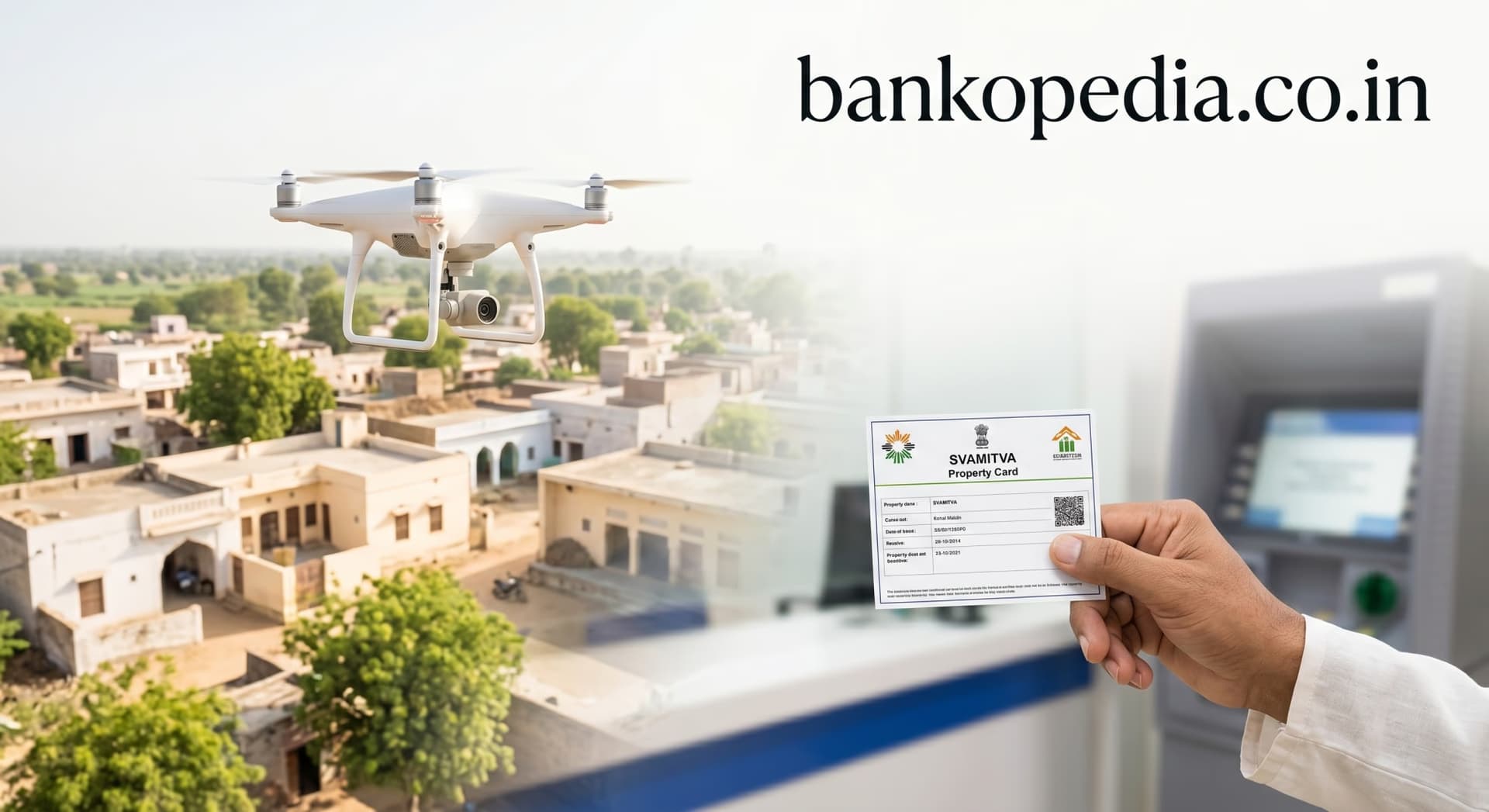
At its core, SVAMITVA is a property rights formalisation programme. It uses drone-based mapping technology to survey the abadi land — the residential and inhabited areas — within rural villages across India. Traditionally, these areas were never systematically surveyed or demarcated, even though agricultural land often had some level of official records. The result was that crores of rural households occupied homes without any document proving ownership or boundaries.
Under SVAMITVA, drones fly over village areas, capture high-resolution imagery, and generate precise land maps. These maps are then used to demarcate individual property boundaries, resolve disputes, and ultimately issue legal property cards — called Property Cards or Adhikar Patras — to households. The card is a formal government document that legally recognises a person's ownership of their residential property.
The scheme's ambition is vast. India has approximately 6.62 lakh villages. The government has set a target to cover all of them, and as of recent reports, over 3.17 lakh villages have been fully surveyed and more than 2.29 crore property cards have been distributed. The technology backbone — drone surveys coordinated by Survey of India — ensures speed and accuracy at a scale that earlier manual surveys simply could not achieve.
The Institutional Ecosystem Behind SVAMITVA
The scheme involves a multi-layered institutional structure. The Ministry of Panchayati Raj provides central oversight and funding. The Survey of India handles the drone-based mapping. State revenue departments are responsible for preparing the final property records. Village-level gram panchayats and local patwaris play a facilitation role. Financial institutions — particularly public sector banks and regional rural banks under the broader supervision of the Reserve Bank of India (RBI) — are expected to be the end beneficiaries of this system, as newly documented property owners become bankable borrowers.
NABARD (National Bank for Agriculture and Rural Development) has a complementary interest in this ecosystem. A large portion of rural credit demand in India flows through microfinance institutions, self-help group linkages, and cooperative banks — all of which NABARD supervises and refinances. When rural households gain property documentation, it strengthens their eligibility for formal agricultural and non-agricultural loans, potentially deepening the rural credit penetration that NABARD works to promote.
How Property Rights Translate Into Credit Access
The link between property ownership documentation and credit access is well-established in development economics. The Peruvian economist Hernando de Soto famously argued in his influential work The Mystery of Capital that the poor in developing countries are not poor because they lack assets — they are poor because their assets are "dead capital," unable to be used as collateral or leveraged in formal economic transactions. SVAMITVA is, in essence, India's most ambitious attempt to convert dead capital into live capital for its rural population.
Here is how the mechanism works in practice:
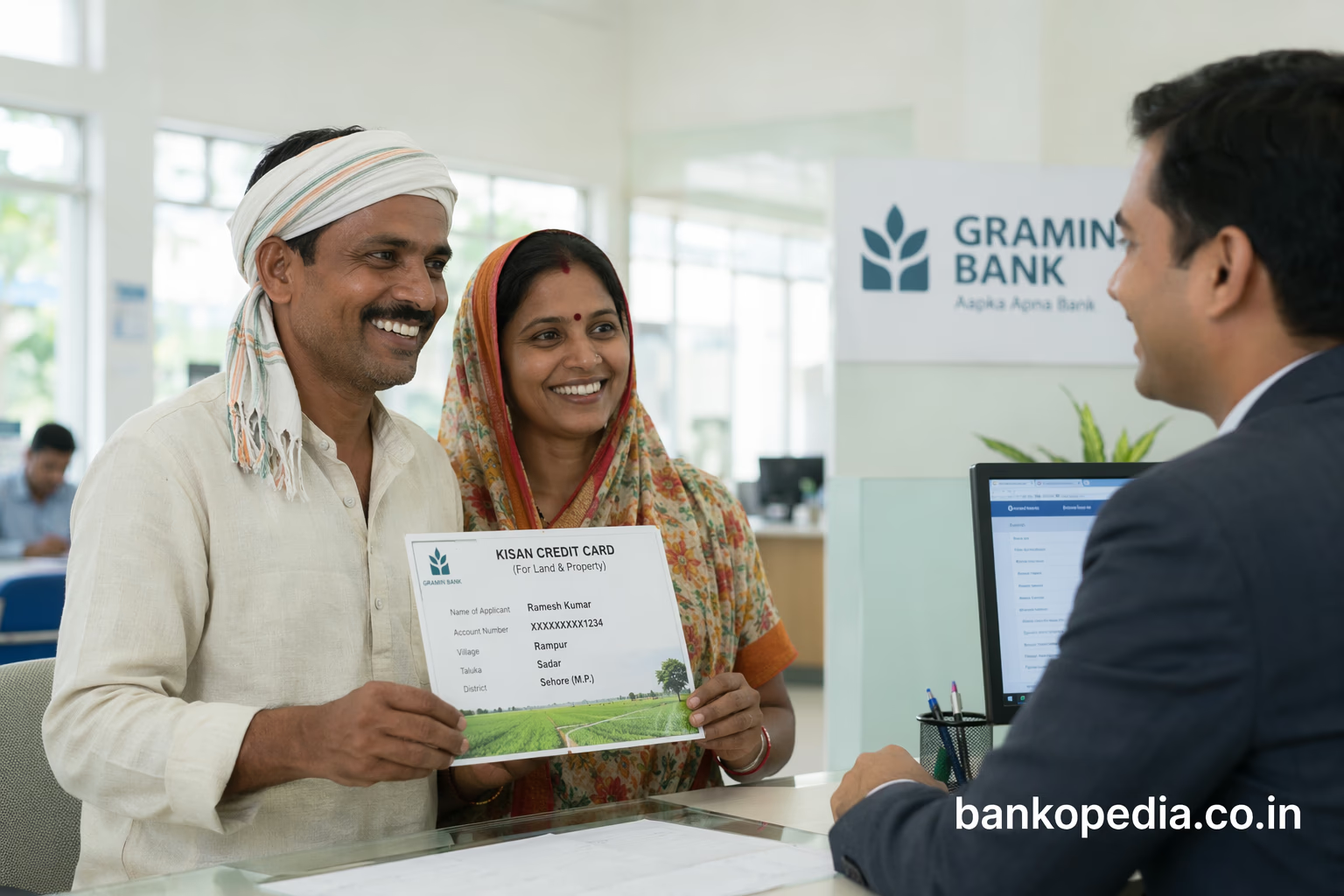
Collateral recognition: Banks and non-banking financial companies (NBFCs) require security for loans above a certain threshold. A Property Card issued under SVAMITVA serves as legal proof of ownership and can be used as collateral to secure loans from formal financial institutions.
Credit history creation: When a borrower takes a formal loan against documented property, they enter the credit system. Repayment history is recorded with credit bureaus such as CIBIL or CRIF High Mark, which gradually builds a credit profile. This, in turn, improves their ability to access larger or unsecured loans in the future.
Reduced lender risk: From the bank's perspective, lending against documented, legally recognised property significantly reduces default risk. This encourages lenders to extend credit at lower interest rates and for larger amounts than they would to unsecured or informally documented borrowers.
Dispute reduction: Land and property disputes are among the most common reasons that rural credit applications get stuck or rejected. Clear boundary demarcation and legal documentation under SVAMITVA reduces title-related litigation risk, making lenders more comfortable.
Government scheme eligibility: Several government credit-linked programmes — including the Pradhan Mantri Awas Yojana (Grameen), Mudra loans, and Kisan Credit Cards — require proof of address or property. A Property Card strengthens a household's documentary eligibility for these schemes.
It is important to note that the RBI's priority sector lending (PSL) guidelines already mandate that scheduled commercial banks direct 40% of adjusted net bank credit towards priority sectors, which include agriculture, micro and small enterprises, and weaker sections. SVAMITVA creates a new category of bankable rural borrowers who can now be more confidently served under these mandates, helping banks meet PSL targets while genuinely expanding financial inclusion.
The Role of Digital Infrastructure
SVAMITVA does not operate in isolation. It connects to India's broader digital public infrastructure. Property data from SVAMITVA surveys is being integrated with the PM-SVANidhi portal, DigiLocker, and in several states, with the state revenue department's land records management systems. This digital trail means that a prospective borrower can — in principle — walk into a bank branch with a DigiLocker-stored Property Card, and the lender can verify ownership details digitally without lengthy manual checks.
This integration is critical for rural banking operations where branch density is lower and staff capacity is limited. The simpler the verification process, the more likely a rural bank branch or business correspondent (BC) can efficiently process loan applications from SVAMITVA beneficiaries.
Key Findings: Impact on Rural Borrowing and Disadvantaged Groups
The most compelling quantitative evidence for SVAMITVA's credit impact comes from the EAC-PM study released in 2025. The study analysed data from villages where SVAMITVA had been implemented against comparable control villages, and its findings deserve careful attention from the banking community.
"The SVAMITVA scheme has resulted in a statistically significant 23% increase in rural credit uptake in surveyed villages, with the most pronounced gains observed among Scheduled Caste, Scheduled Tribe, and Other Backward Class households."
— Economic Advisory Council to the Prime Minister (EAC-PM), 2025
A 23% lift in credit access is not a marginal improvement — it is a structural shift. To contextualise this: India's rural credit gap has been a persistent concern for the RBI, NABARD, and successive finance commissions. Even with decades of priority sector lending mandates, Jan Dhan account openings, and microfinance expansion, formal credit penetration in rural India has remained uneven and inadequate. A single property documentation scheme demonstrably moving the needle by nearly a quarter is significant.
Impact on Disadvantaged and Marginalised Communities
Perhaps the most socially significant finding of the EAC-PM study is the disproportionately positive impact on disadvantaged groups. Scheduled Caste (SC), Scheduled Tribe (ST), and OBC households — communities that have historically faced the sharpest exclusion from formal finance — showed stronger credit access improvements than the general population after SVAMITVA coverage.
This outcome is not accidental. Marginalised communities in rural India have historically been most vulnerable to informal land occupation without documentation. Their properties were most likely to be "invisible" to the formal financial system. When SVAMITVA formally records their ownership, it provides disproportionate benefit because they are starting from the lowest baseline of formal recognition.
The implications for financial institutions are clear:
SVAMITVA beneficiary databases can be actively used by banks and NBFCs to target outreach to previously unbanked SC/ST/OBC households.
Credit officers and business correspondents in SVAMITVA-covered villages can use Property Card data to pre-identify eligible borrowers for small-ticket loans.
Microfinance institutions and small finance banks, which often serve these exact demographics, have a new, reliable documentation anchor for their Know Your Customer (KYC) and collateral assessment processes.
Impact on Women's Credit Access
The scheme has also shown promising results for women's financial inclusion. Several states — including Uttar Pradesh, Maharashtra, and Madhya Pradesh — have encouraged joint registration of property cards in the names of both spouses or have facilitated women-headed households being registered as sole owners. When women are named on property documents, their ability to independently access credit improves significantly. Self-Help Group (SHG) lending and women-focused microfinance initiatives can be further strengthened when female borrowers carry formal property documentation.
Broader Economic Multiplier Effects
Credit is not an end in itself — it is a means to investment and economic activity. The EAC-PM study and other field reports suggest that in SVAMITVA-covered villages, increased credit access has begun to translate into:
Higher investment in home construction and renovation
Greater uptake of small business loans for rural micro-enterprises
Improved ability to weather agricultural shocks through emergency credit
Reduced dependence on informal moneylenders, lowering the effective cost of borrowing
For a country where rural consumption and rural investment are critical macroeconomic levers, these multiplier effects have implications well beyond the villages themselves.
Challenges and the Road Ahead for SVAMITVA
Despite its achievements, SVAMITVA faces a set of implementation, institutional, and structural challenges that must be honestly acknowledged if the programme is to fulfil its potential.
Coverage Gaps and Implementation Speed
As of early 2025, while significant progress has been made, lakhs of villages remain to be surveyed. The pace of drone surveys and subsequent record finalisation varies significantly across states. States with stronger revenue administration capacity — such as Uttar Pradesh, Madhya Pradesh, and Haryana — have moved faster, while states with complex land tenures, tribal land rights, or administrative capacity constraints have lagged. Until universal coverage is achieved, the scheme's benefits remain geographically uneven.
Last-Mile Banking Infrastructure
A Property Card alone does not guarantee a loan. The rural banking infrastructure needed to process loan applications, assess creditworthiness, and disburse funds in a timely manner remains inadequate in many regions. The RBI has consistently flagged rural banking outreach as a priority, and the business correspondent model has expanded access. However, BC agents often lack the authority or systems to process collateral-based loans — they remain primarily conduits for savings accounts and small remittances.
For SVAMITVA's credit-enabling potential to be fully realised, banks need to:
Train rural branch staff and BCs specifically on SVAMITVA Property Card verification and collateral assessment.
Design simplified loan products for SVAMITVA beneficiaries, particularly for home improvement and micro-enterprise purposes.
Integrate SVAMITVA property data with core banking systems to automate eligibility checks.
Legal and Regulatory Complexities
Land is a state subject under the Indian Constitution, which means the legal status and enforceability of Property Cards as collateral instruments varies across states. In some states, the Property Card is fully legally recognised for mortgage purposes; in others, legislative amendments are still pending to confer this status. Until uniformity is achieved, lenders operating across states face legal uncertainty that may make them cautious about accepting Property Cards as primary collateral.
There is also the question of dispute resolution. While SVAMITVA is designed to reduce property disputes, the survey process itself can trigger new boundary-related conflicts. Effective grievance redressal mechanisms at the gram panchayat and district level are essential to ensuring that disputes are resolved quickly and do not block loan processing.
Awareness and Financial Literacy
Many SVAMITVA beneficiaries — particularly in remote tribal areas or among illiterate populations — may not be aware that their Property Card can be used to access bank loans. Financial literacy campaigns specifically linking SVAMITVA documentation to credit access are needed. NABARD, through its Financial Literacy Centres (FLCs), and the RBI, through its Financial Inclusion agenda, can play a role here alongside state governments and gram panchayats.
Integration With Credit Infrastructure
For Property Cards to become truly effective credit instruments, deeper integration is required between the SVAMITVA database and the credit infrastructure — specifically, credit bureaus, bank loan origination systems, and the Central Registry of Securitisation Asset Reconstruction and Security Interest (CERSAI), which records security interests over movable and immovable property. Without this integration, the risk of double-pledging or fraudulent use of Property Cards as collateral with multiple lenders cannot be fully mitigated.
Conclusion: A Foundation Worth Building Upon
The SVAMITVA scheme represents one of the most structurally sound financial inclusion interventions India has undertaken in recent years. Unlike demand-side interventions — such as interest rate subventions or loan waivers — it addresses a fundamental supply-side barrier: the absence of legally recognised property rights that allow rural households to participate in formal credit markets. The EAC-PM study's finding of a 23% increase in rural credit access provides empirical validation for what development economists have long argued: property formalisation is a prerequisite for sustainable financial inclusion.
For banking professionals, the message is actionable. Financial institutions — commercial banks, regional rural banks, small finance banks, NBFCs, and microfinance institutions — need to actively engage with SVAMITVA data and design credit products suited to this newly documented segment. The RBI's priority sector lending framework already creates an incentive structure for this. What is needed now is the operational follow-through: training, technology integration, product design, and outreach.
The road ahead for SVAMITVA involves completing national coverage, resolving state-level legal heterogeneity, building last-mile credit delivery infrastructure, and investing in financial literacy. None of these are insurmountable. India has demonstrated, through UPI, Jan Dhan, and Aadhaar, that it can execute ambitious financial infrastructure programmes at scale. SVAMITVA deserves the same institutional commitment and follow-through — because in giving rural India its property rights, we give it something even more valuable: the ability to build wealth on a foundation that the banking system finally recognises.